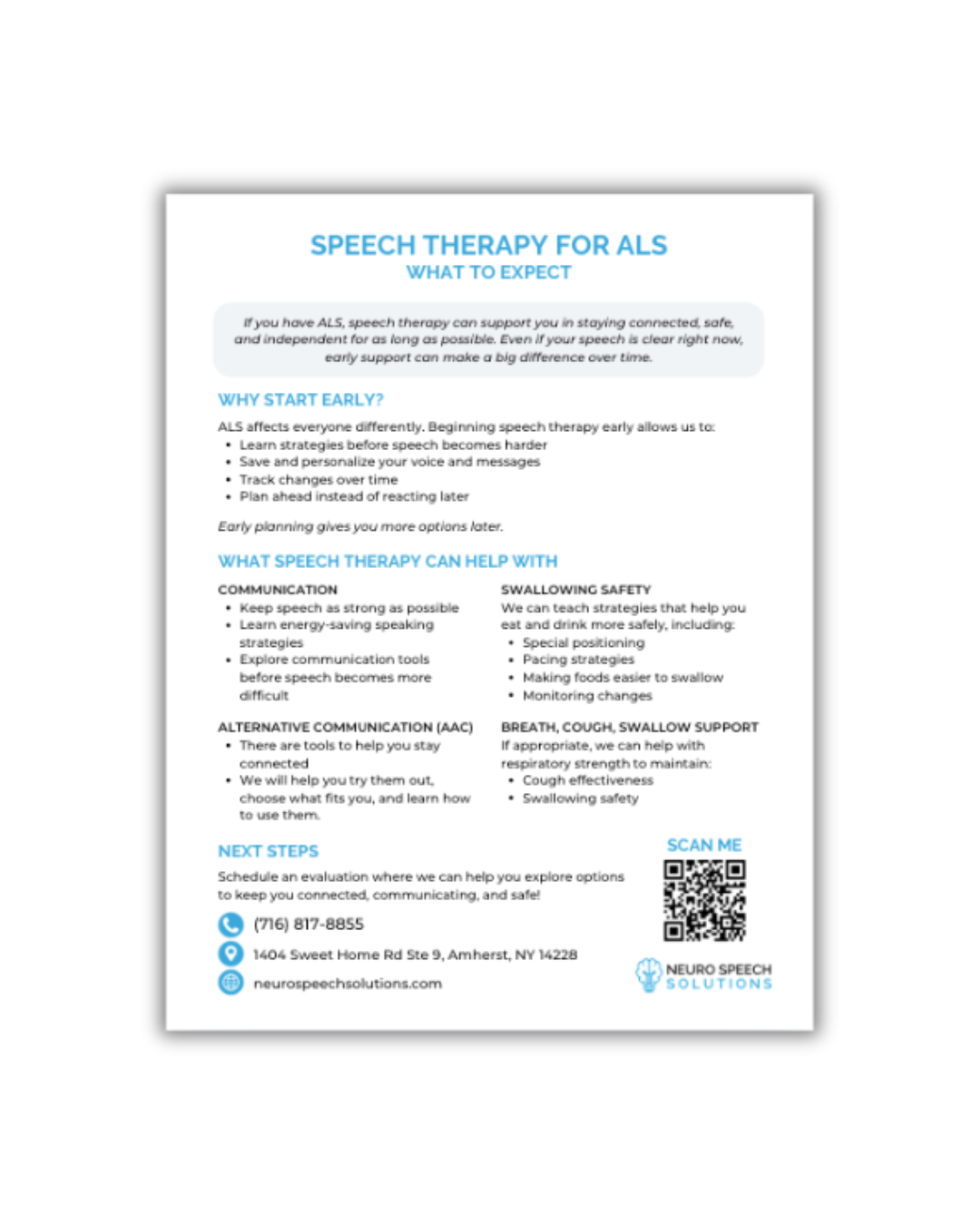

Speech Therapy for ALS
Staying connected, safe, and empowered throughout your ALS journey
At Neuro Speech Solutions, we specialize in helping people with ALS maintain communication, voice, and swallowing function for as long as possible. Whether your speech is currently strong or already changing, working with a speech-language pathologist early can help you stay independent and prepared at every stage.
Why Speech Therapy Matters for ALS
ALS can affect speech, breathing, swallowing, and voice.
Each person’s experience is different, but the goal of therapy is always the same… keep you communicating confidently for as long as possible.
Our clinicians are experienced in ALS care and understand the medical, emotional, and practical challenges of progressive neurological conditions.

What We Support
Communication
We help you use energy-conserving techniques, slow, clear speech, and positioning strategies to maintain understandable communication as long as possible.
Alternative Communication (AAC)
We help you explore communication apps, speech-generating devices, and eye-tracking tools early, so you can stay connected even if speaking becomes difficult.
Swallowing Safety
We teach safe swallowing strategies, positioning, and texture modifications to help reduce the risk of choking or aspiration and support safe eating and drinking.
Voice & Message Banking
If your voice is still strong, we can help you record personal words, messages, and phrases so technology can speak in a voice that still sounds like you.
Breath Training
When appropriate, we guide you through expiratory muscle strength exercises to support voice strength, cough effectiveness, and airway protection.
Education & Support
We provide ongoing education, caregiver support, and planning guidance to help you navigate changes and feel prepared as the disease progresses.
Get Started Early!
Many of the most helpful tools in ALS (such as AAC and voice banking) are easiest to learn early, when speaking and breathing strength is higher.
Starting early allows us to:
Preserve your voice while we can
Plan ahead instead of reacting later
Build comfort with technology gradually
Support independence as long as possible
Even a few early sessions can make future stages easier.